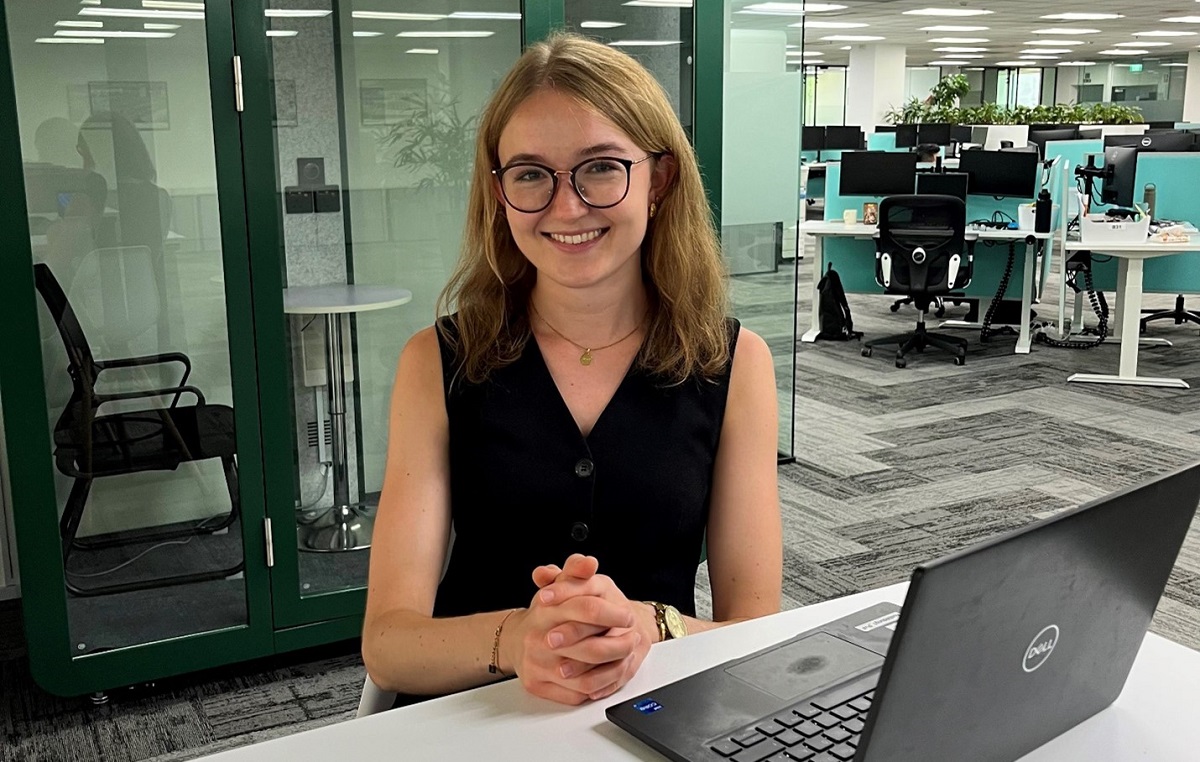
A semester abroad during your studies is a valuable opportunity to gain new experience. Janine studied industrial engineering with a focus on digital transformation at Pepperl+Fuchs and took the opportunity to write her bachelor’s thesis at the Singapore site last year. In this interview, she talks about her impressions and experiences.
Hello, Janine. You wanted to write your bachelor’s thesis abroad?
That’s right, this possibility was already on the table at the beginning of my studies and I was very interested right from the start. A colleague who had studied two years above me wrote her bachelor’s thesis at Pepperl+Fuchs in Singapore and was very enthusiastic about her experience there. During my various practical phases, I got in touch with colleagues in Singapore many times and developed a strong desire to get to know the local processes and work culture. So, I shared my wish with my training manager, who then put me in touch with my colleagues from Singapore. Throughout the entire preparation phase, the training department was always there to support me. Regarding visa and accommodation, I received valuable help from the human resources department in Singapore.
From Mannheim to Singapore
Arriving there must have been very exciting, right? Where did you live?
Yes, I was incredibly impressed by everything! At the same time, I was also a bit excited and wondered how I would find my way around and build a life there. A great helping hand was that I could live in a Pepperl+Fuchs apartment with an intern and a colleague from Germany. This gave me an immediate connection, and we did a lot together. But I also used an app to actively look for friends – and I found some! Especially in Singapore, there are many interns from Germany, all over Europe and Australia, who are just as interested in making friends as you are.
What was the topic of your bachelor’s thesis?
During my fifth and sixth practical phases, I worked on artificial (AI) in supply chain management – a relevant topic also at the Pepperl+Fuchs site in Singapore. In my bachelor’s thesis, I evaluated software solutions that use AI to automate the processing of order confirmations in procurement. Since I was on site, I was able to exchange ideas closely with my colleagues.
Everyday life in a foreign country
A normal working day… What did it look like? Did your colleagues support you?
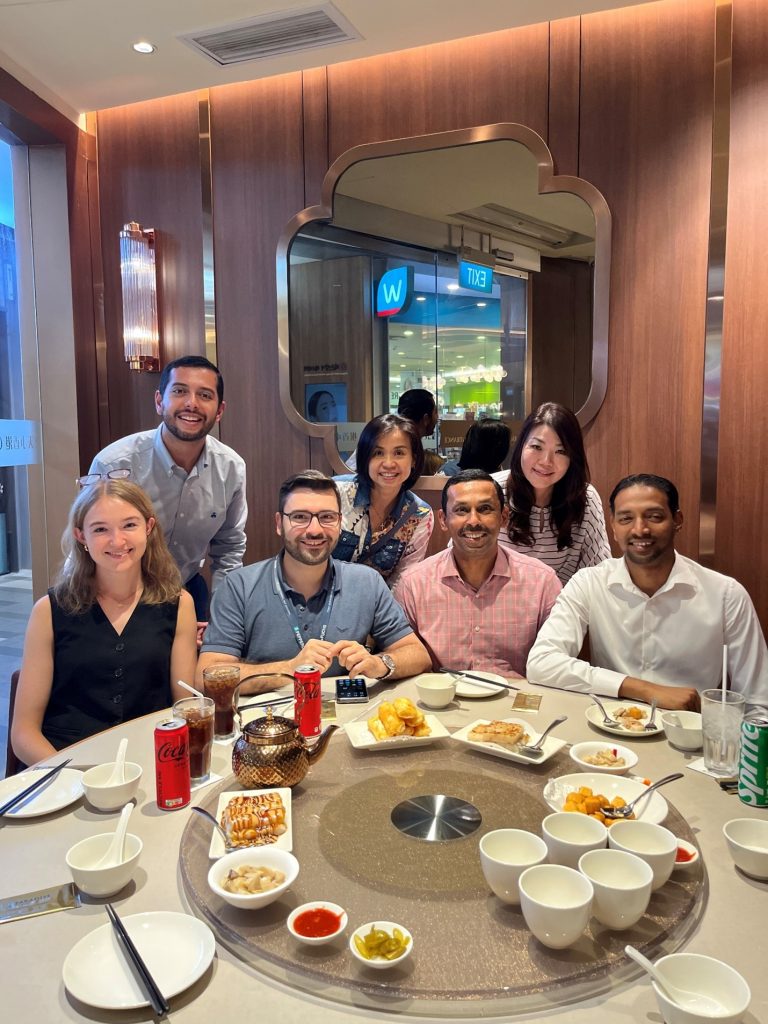
I always walked to the office. I worked on my bachelor’s project until lunch break, and in the afternoon, I worked on additional tasks. During lunch break, we usually went to the nearby “Hawker Center”, where there are many food stalls. In Singapore, everyone works more hours than in Germany, so I adapted and finished work around 6 p.m. and then went to the gym. My colleagues were very helpful, whenever I had questions or needed more information, they were supportive and open. Many of them agreed as interview partners for my project. Some colleagues also provided a lot of “emotional support”. They regularly checked in how I was doing, invited me proactively to lunch together and organized after-work events from time to time. I felt in good hands right from the very beginning.
What do you take away from this time?
I definitely became more independent and self-confident. In addition, I also improved my English skills and developed a better understanding of different working cultures and communication structures.
An experience for life
Which experiences stayed with you the most?
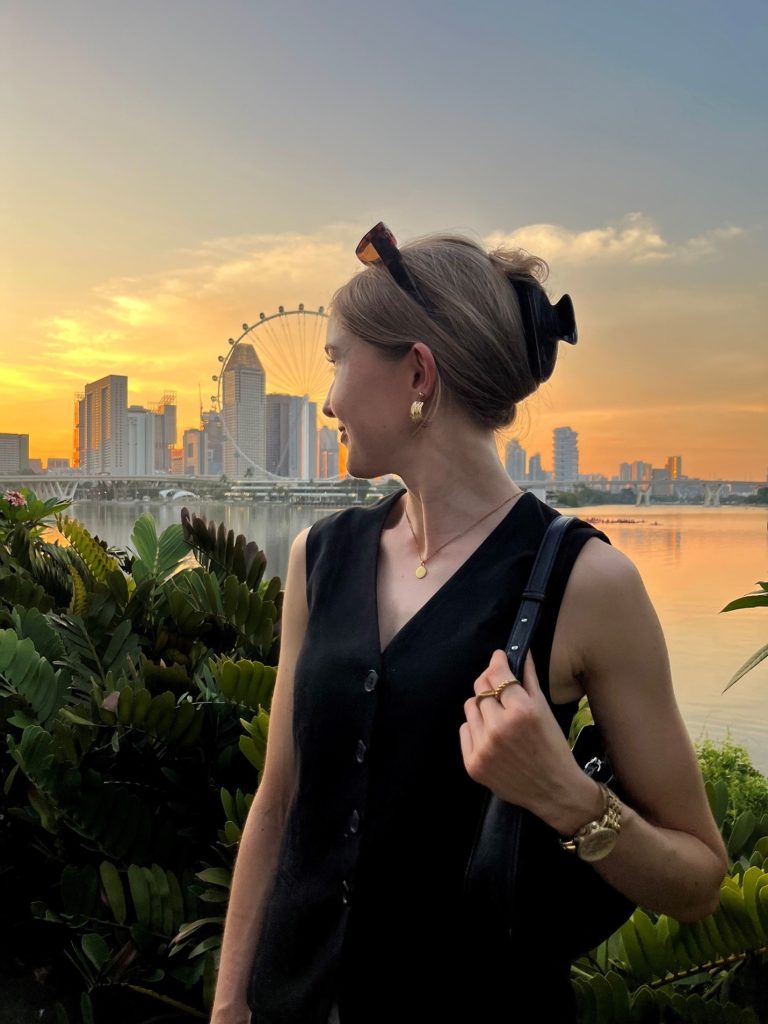
I was especially impressed by Marina Bay. From there you have a breathtaking view of the skyscrapers of the Central Business District, the famous Marina Bay Sands Hotel and the Merlion, Singapore’s landmark. Thanks to Singapore’s central location, I was also able to travel easily to surrounding countries. For example, I spent a long weekend with a friend in Malaysia, where we snorkeled with turtles, sharks and rainbow fish. I will never forget that.
What advice would you give future students who want to do a semester abroad?
Good English is essential – of course, you learn a lot during your stay, but a solid foundation is essential. The “Singlish” spoken here takes some time getting used to at first. The locals have their very own slang, their own unique intonation and often speak very quickly. But over time, you get used to it! In addition, you should bring a high degree of independence and initiative. I actively approached people, both professionally and privately. You have to build up a completely new social environment in a foreign country, which is not always easy at first. But this experience is worth it and I would do it again anytime!