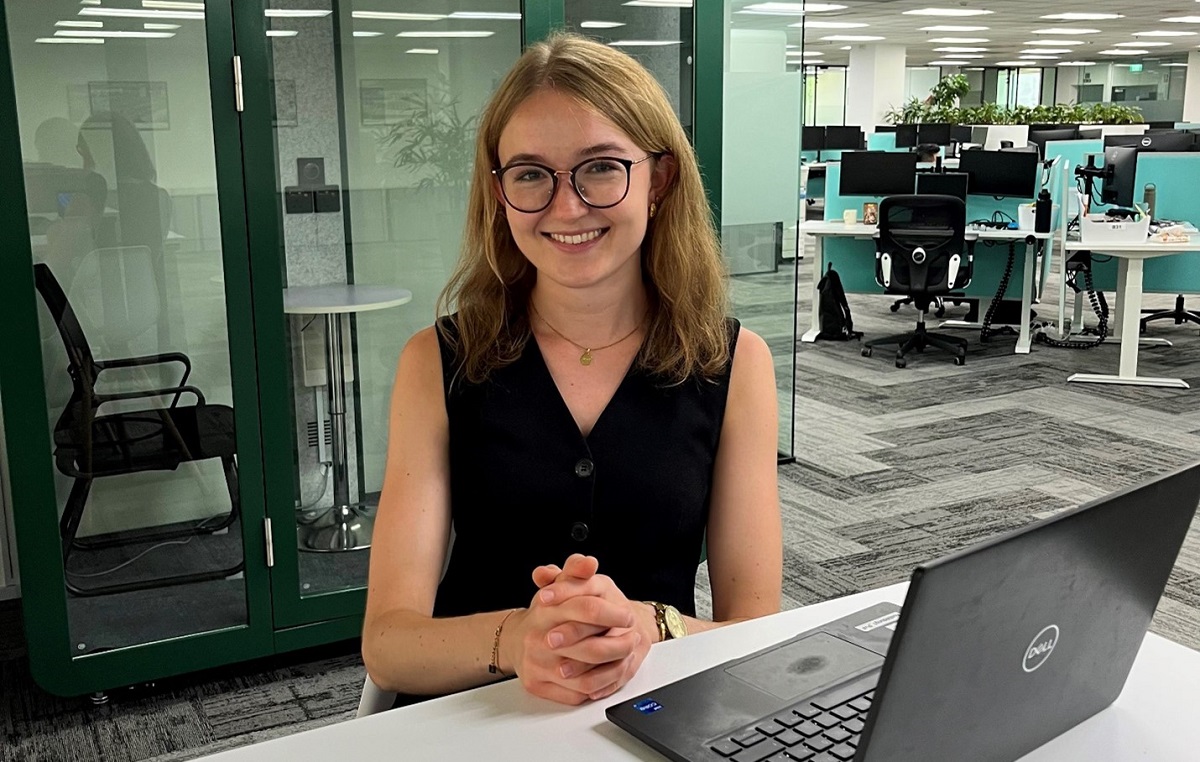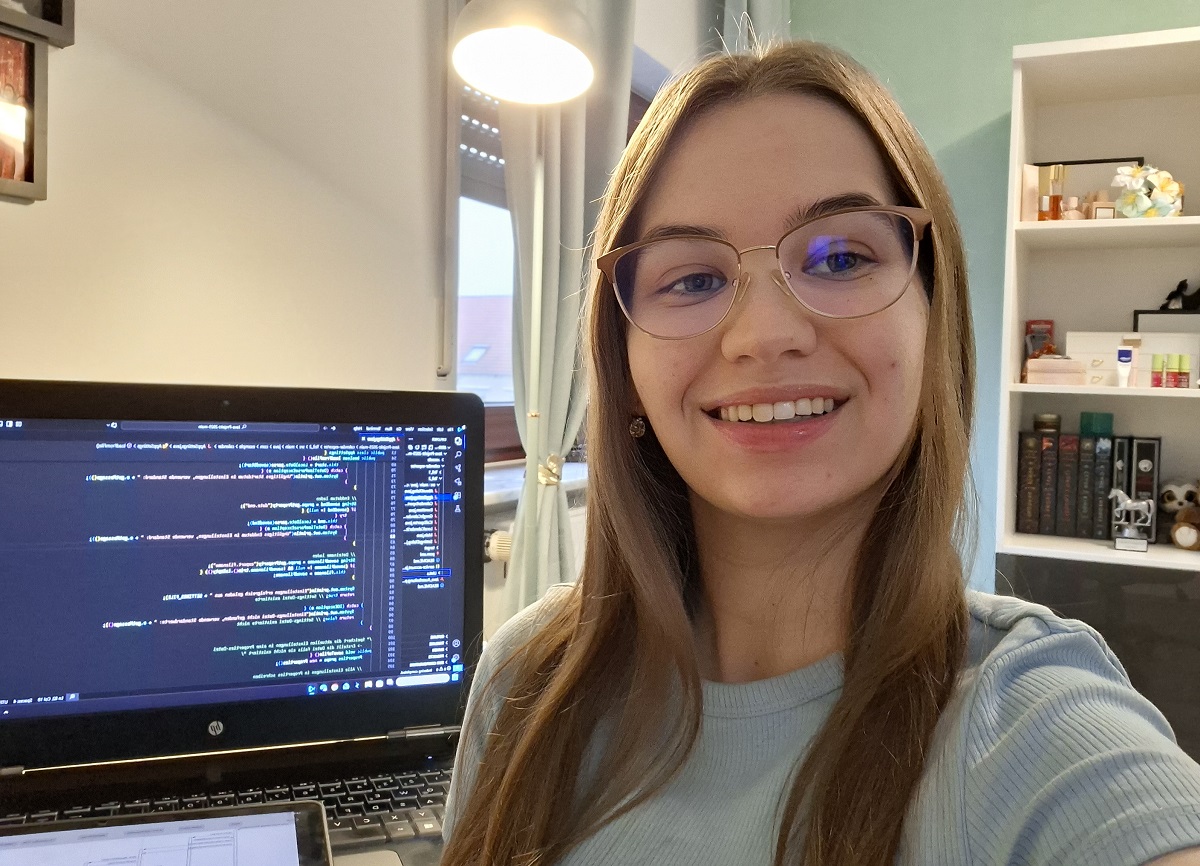
Today, February 11, 2026, is the International Day of Women and Girls in Science – a day meant to encourage girls and women to pursue their way in STEM fields. One of them is Laura, a dual student of Applied Computer Science at Pepperl+Fuchs in Mannheim. Her interest in computer science was sparked while she was still at school.
Every year, this day draws attention to how important equal opportunities and female role models are in science, technology, engineering and mathematics (STEM). Studying in these fields is becoming an option for more and more young women. In 2024, the year in which Laura also began her studies in Applied Computer Science, around 36% of first-year students in STEM degree programs were female, according to the Federal Statistical Office. A new record high. In the interview, Laura talks about how she got into computer science and gives an insight into her everyday life as a student.
Hello, Laura. Tell us, why did you decide to study Applied Computer Science?
Hello! I attended a biotechnology-focused high school, where in 12th and 13th grade I had courses in computer science and bioinformatics. There, we regularly solved smaller problems using programs. I particularly remember a project from bioinformatics: We read DNA sequences using a python program, analyzed them, and then converted them into their protein sequences. During that time, I quickly realized how much I enjoy computer science. The decision to pursue a dual study program was easy for me, because I wanted to gain practical experience right from the start.
Varied projects within the company
What is the ratio of women to men in your degree program?
In our course, we have seven female students out of a total of 28 persons – a record number. Our lecturers were pleasantly surprised, as the norm is usually only two to four women per course.
How does the program work?
The theory and practical phases alternative every three months. An exception is the fifth and sixth semesters, each lasting six months, during which the bachelor’s thesis is written. During theory phases, the material is taught in a very compact and intensive way. The time at Pepperl+Fuchs is very diverse. After the third practical phase, we are allowed to choose the department and projects ourselves. There is a project marketplace for this. Over the three months, you then work independently on the project and write a project report about it.
Which department have you already gotten to know at Pepperl+Fuchs?
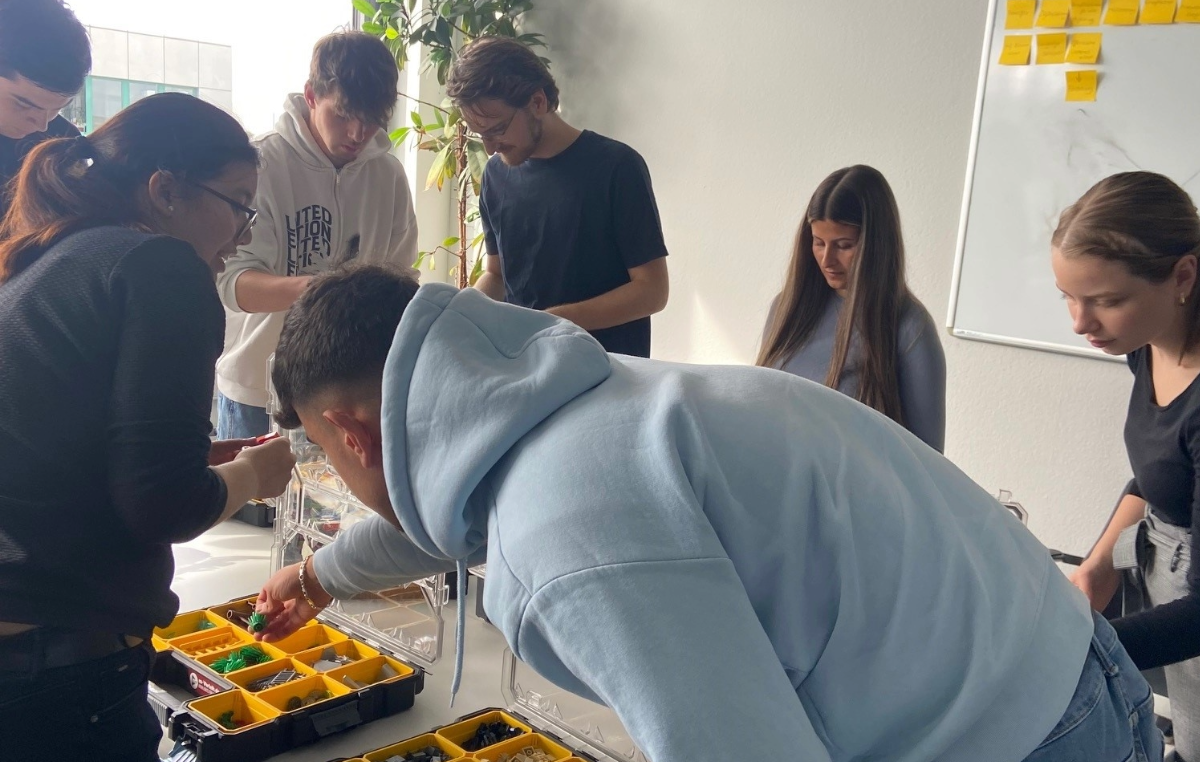
During my first practical phase, I worked in sales and, together with a fellow student, we completed the suitcase exhibit. After that, I got to know the Global Compliance – Safety & Security department and worked in the field of cybersecurity. There, I configured a tool for monitoring security and vulnerabilities. Currently, I am supporting the Environment, Health and Safety team. I am working on a tool for the automated assessment of physical workload at the workplace in the outbound inspections at the European Distribution Center. So far, I have really enjoyed all of the practical phases, as each one had a different focus. I think it’s great that the results of project work so far provide real added value for the company and are not just “busywork” for students.
JavaScript, Kotlin & Co
And which subjects have you had so far during the theory phases?
So far, we have had mathematics and theoretical computer science in every semester, covering topics such as algorithms and automata. In the Web Engineering module, we worked with HTML, CSS, JavaScript, and PHP. We also learned additional programming languages such as C, Java, and Kotlin. In addition, we had modules like workflow management, project management, business administration, coding theory, and computer engineering.
What do you particularly like about the program?
What I especially like is the compact way the content is taught. In mathematics, the focus is not on memorizing derivations, but on problem-solving and calculations. The relatively small class sizes of around 20 to 30 students are also very pleasant, as they make it easy to ask questions at any time. Additionally, it is motivating to be able to apply the theoretical knowledge directly in practice.
Do you have plans after graduation?
After graduating, I would like to start my professional life directly and stay at Pepperl+Fuchs. Through the dual study program, I have already been able to make many contacts within the company, and it would be a great pity not to be able to continue making use of this opportunity.