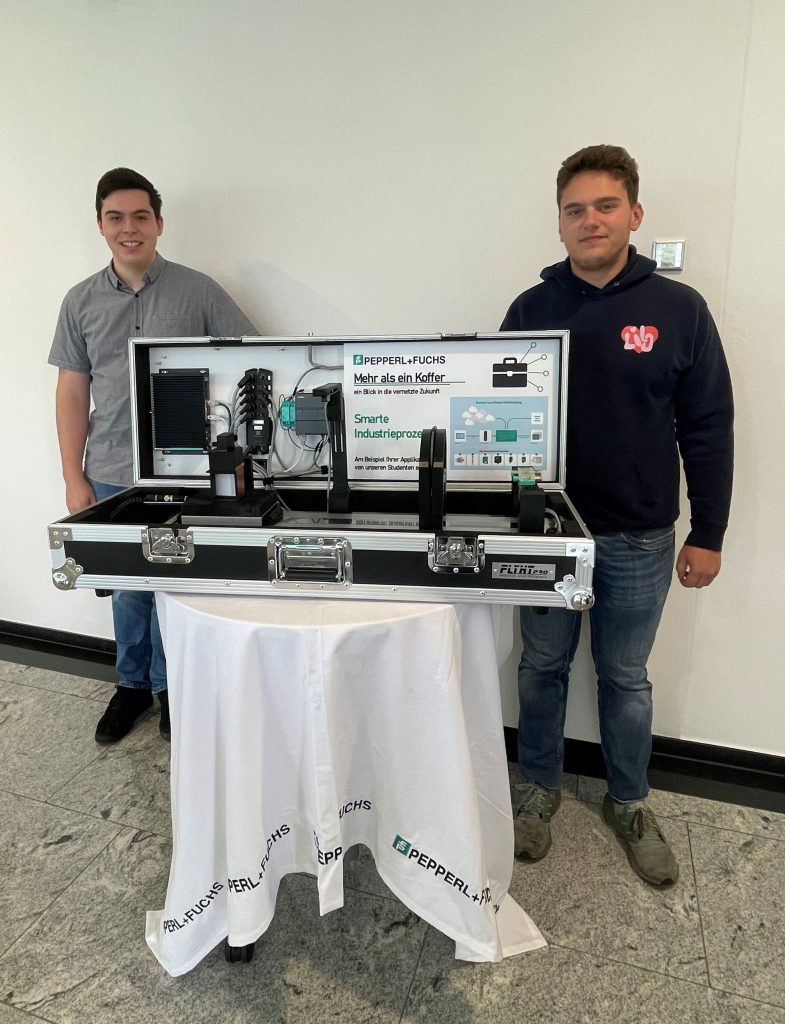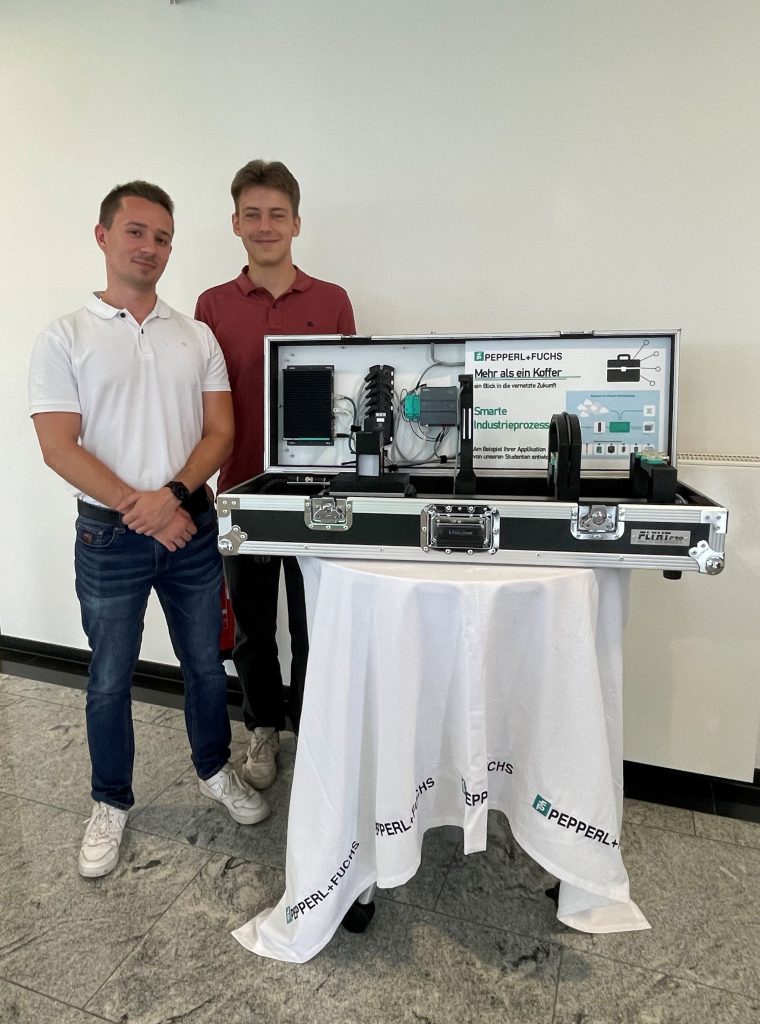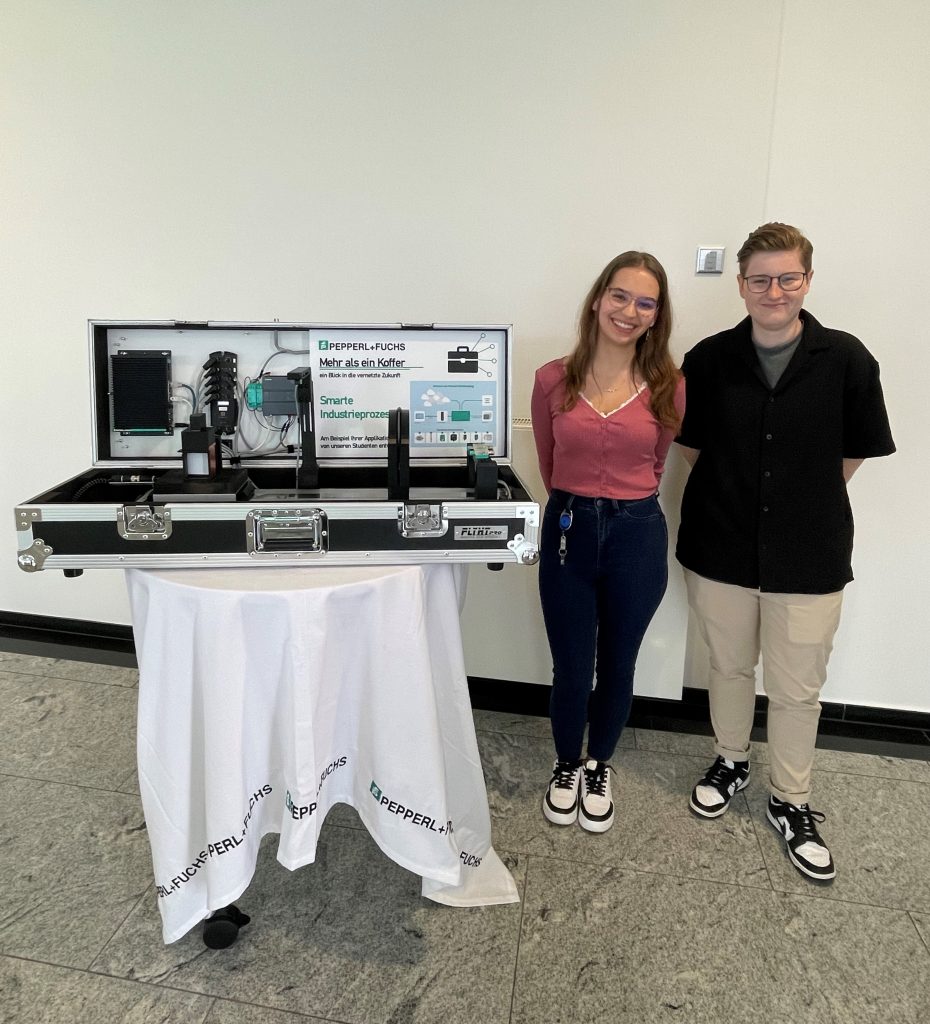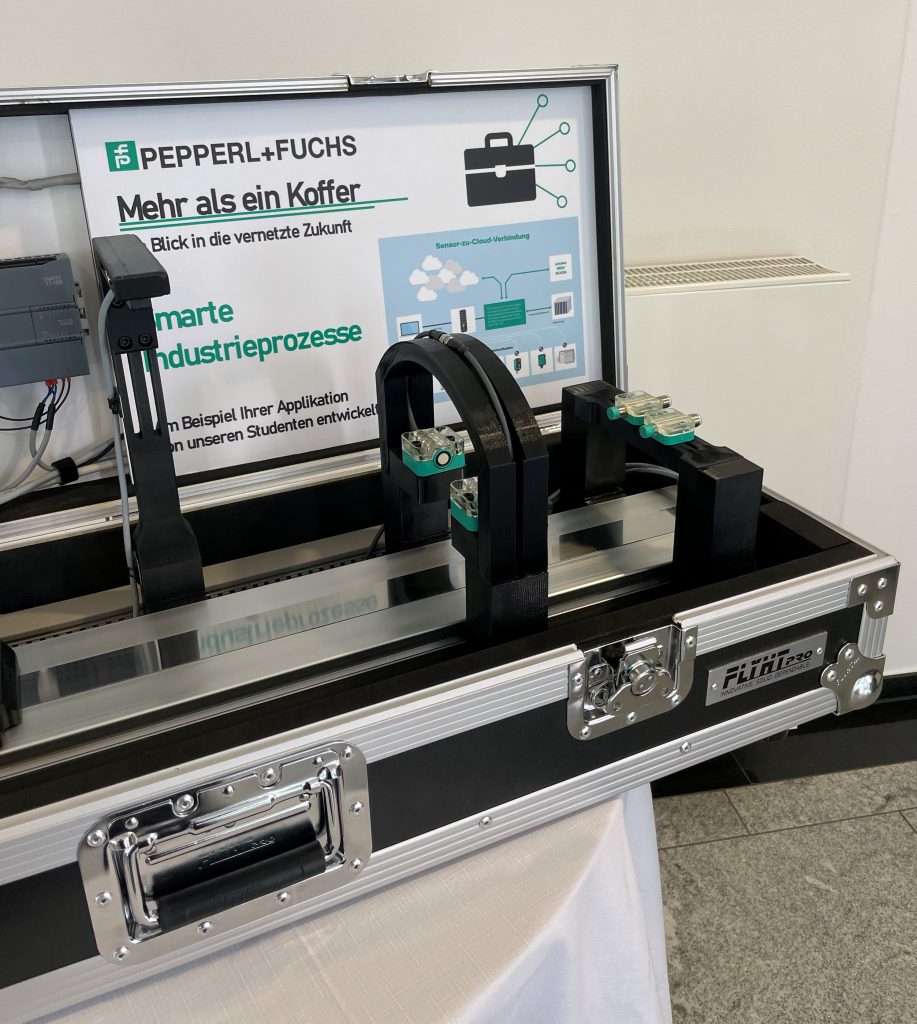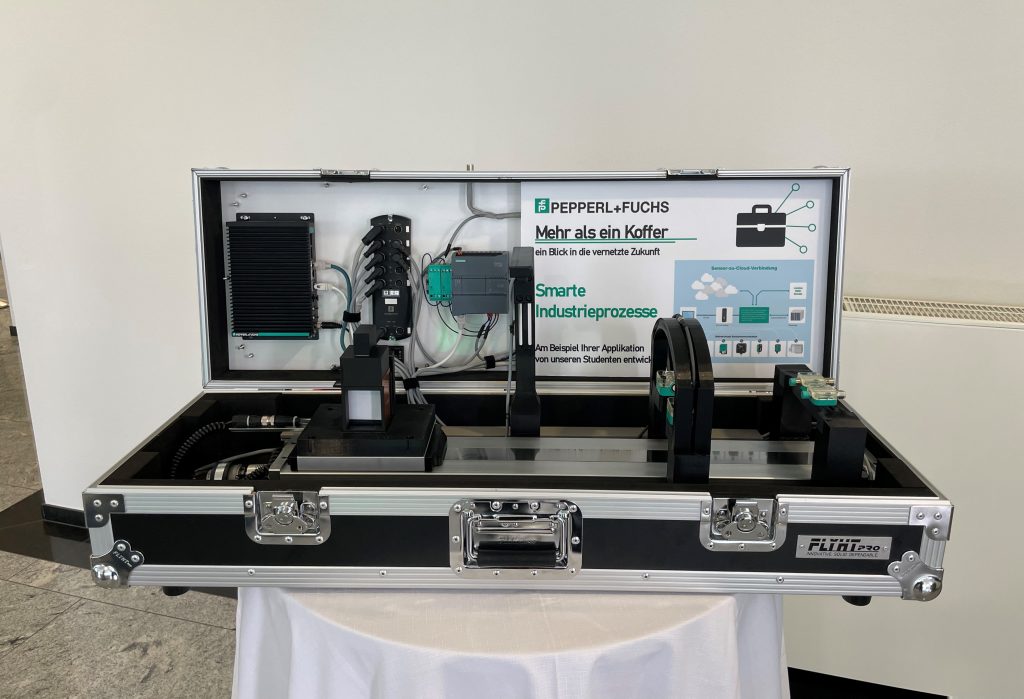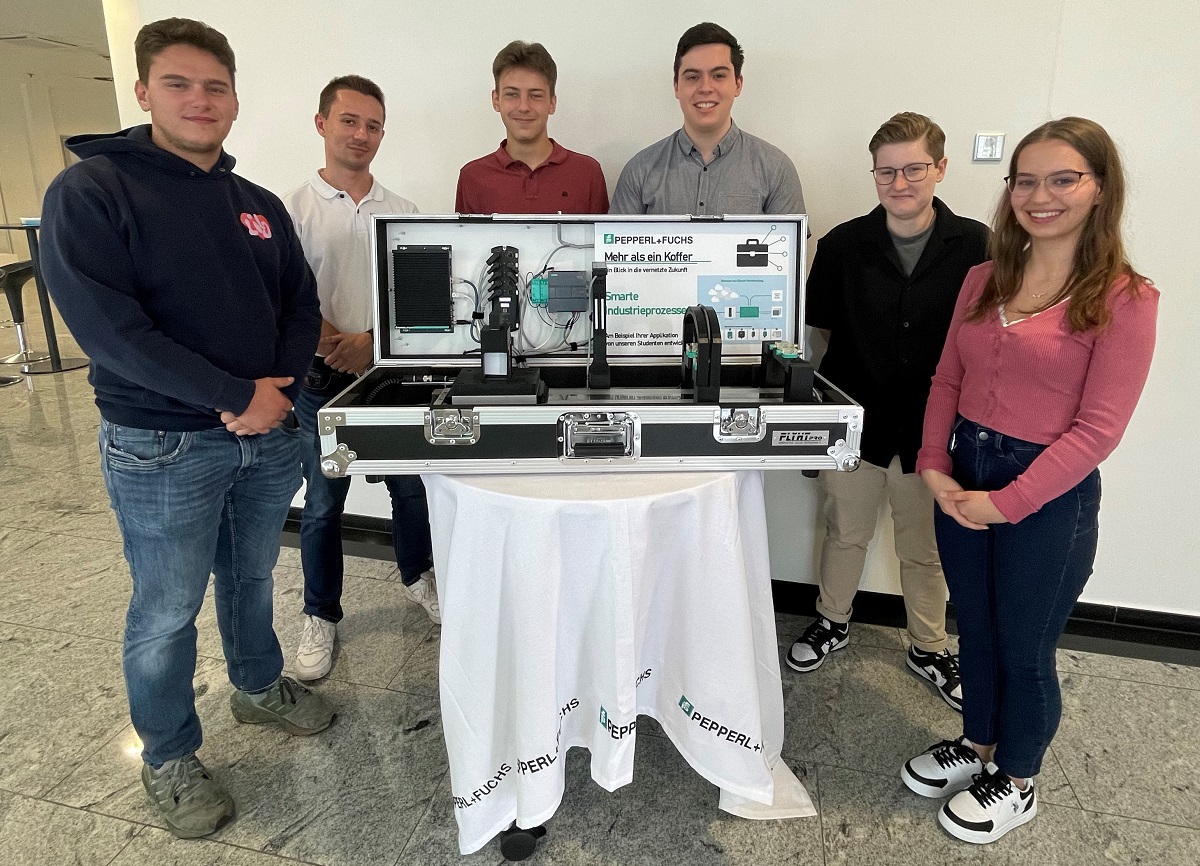
… for customer visits. With an exhibit that is compact and portable while simultaneously showcasing many products from the field of factory automation (FA). During several practical phases at Pepperl+Fuchs, a total of seven dual students worked on the exhibit in teams, including the relay-race principle: after each phase, one team handed the project over to the next.
Dennis: I was the first to be entrusted with this task. The goal was to design a completely student-developed exhibit that would inspire customers for Pepperl+Fuchs products. As many products as possible should be visible. The biggest challenge was to develop a concept that met the requirements as well as being interesting and convincing from the customer’s point of view. At the same time, I wanted to prepare everything in such a way that subsequent teams could build on it.
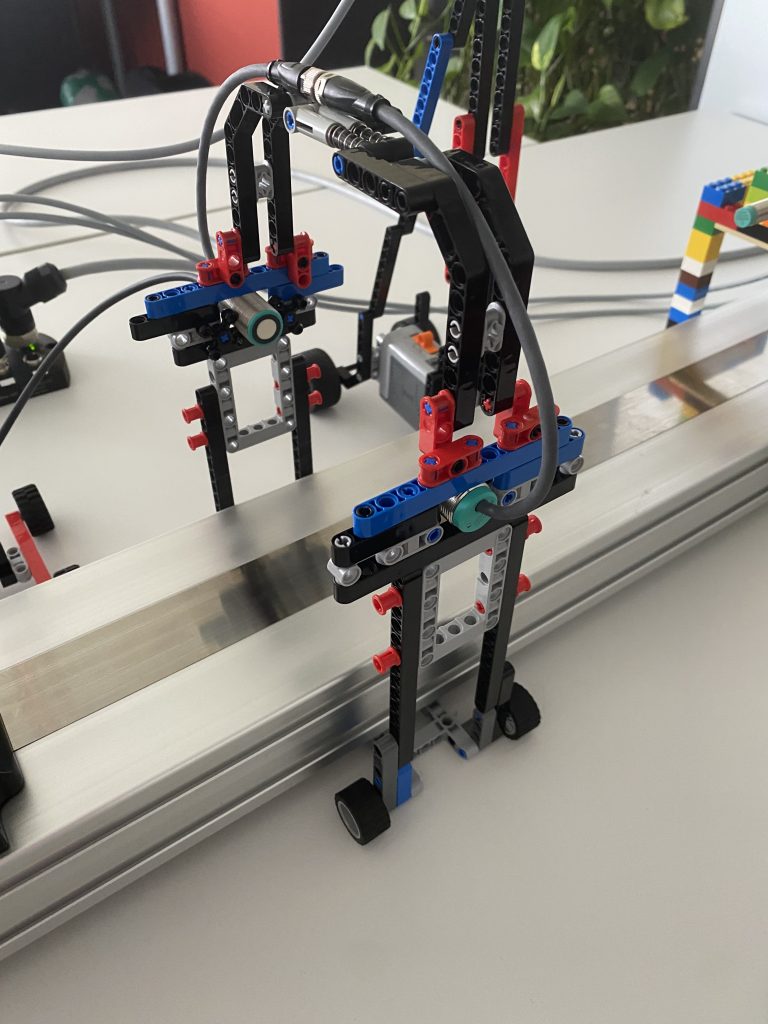
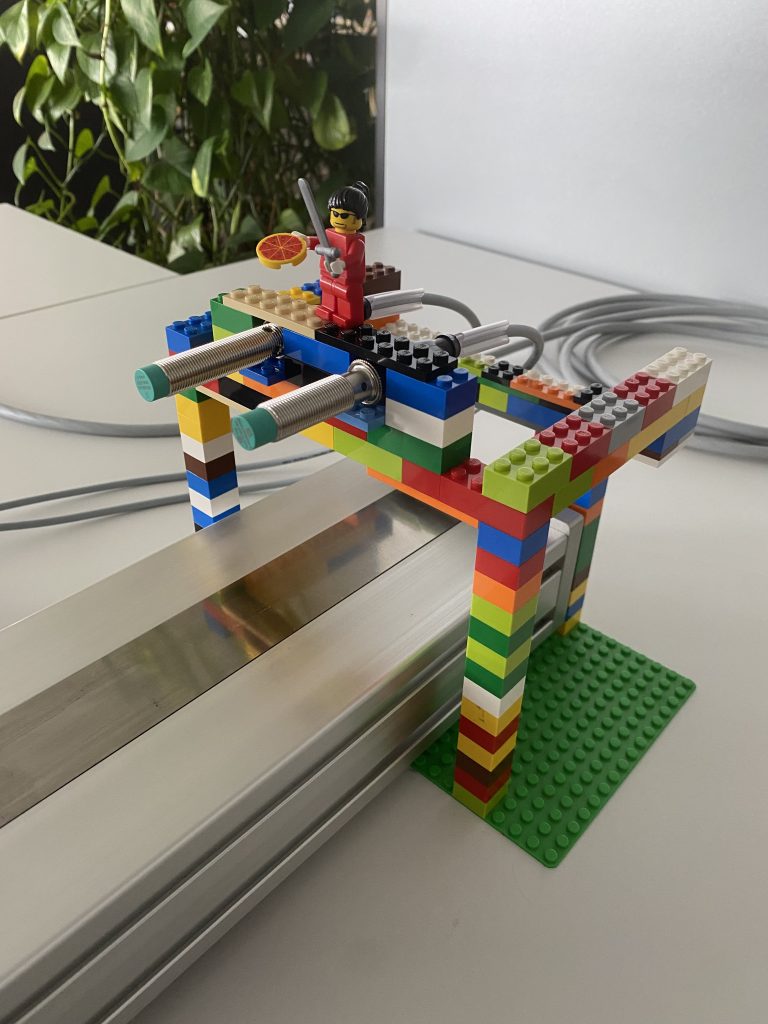
My idea was a compact model with a “cube” that moves along a linear axis and reacts to various sensors along the way. For this purpose, I created a digital 3D model in which the sensors were clearly arranged. I hoped that the later teams would be able to easily implement the idea. It was nice to see how my idea was concretely implemented and constantly improved in the following phases. Overall, I really enjoyed my practical phase in sales and learned a lot about the FA product portfolio.
The first handover
Aaron: My fellow student and I took over Dennis’s concept, which was basically a Word file. He had developed the concept around a linear axis. A cube is supposed to be transported along the axis. Six different sensors react to this axis. For example, a built-in ultrasonic sensor can measure the cube’s height and stop the linear axis if the cube is too tall for further stations.
What we developed further, the challenges we encountered, and how we handed over the exhibit can be read in the blog post “Technology meets childhood dream”. It was particularly exciting to see how something tangible can emerge from a paper concept. We had a lot of fun and were very happy about the trust that was placed to us, since such an exhibit is not quite cheap either. It was our first project to be shown to a customer, which makes it something truly special.
Ready for transport
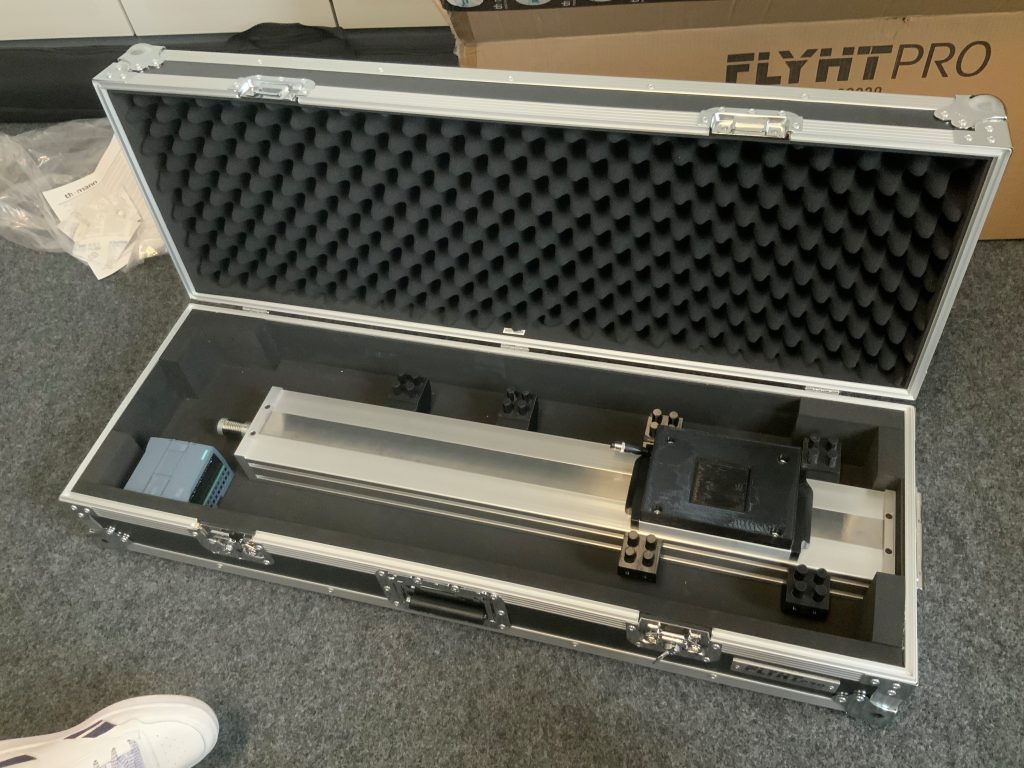
Daniel und David: When we took over the project, the sensors were already selected and the brackets printed. Our task now was to make the exhibit transportable. For this, we looked for a suitcase with enough space. In addition, we designed the electrical wiring and partly implemented it. Our biggest challenge was finding a suitcase that wasn’t too big and also not too expensive. In addition, it wasn’t easy to determine suitable electrical components for controlling the motor.
We spoke with colleagues from many different departments and realized how cross-functional such a project can be. In the end, we managed to mount the exhibit in the suitcase, carry out the basic electrical installation and prepare the further installation. Since the taks were very varied – from research, to discussions with the colleagues, to the actual construction of the exhibit – we always enjoyed working on it. We took away a lot from this time, such as learning to think from both a customer’s and from the field service perspective, and to build the exhibit accordingly.
The final step
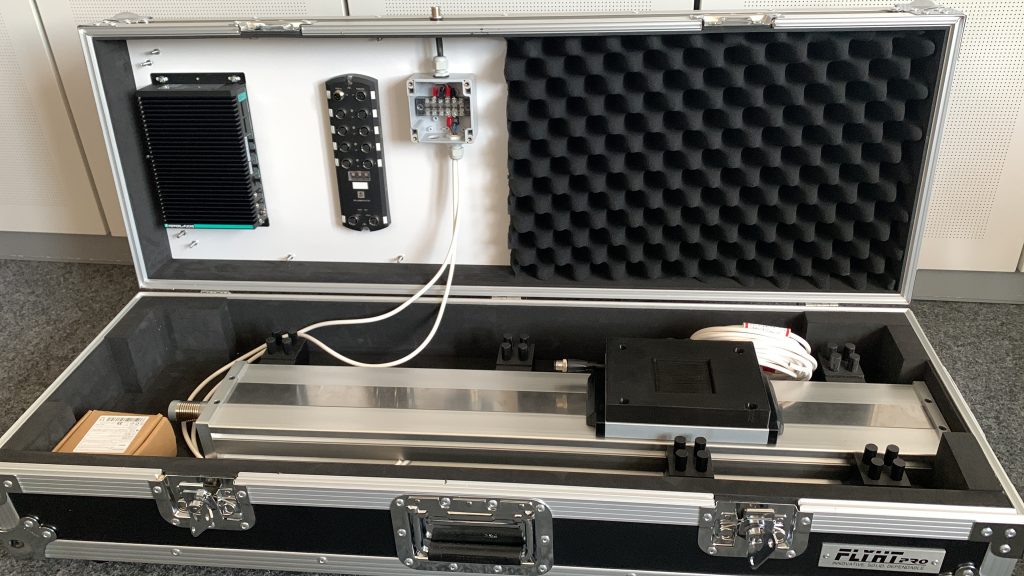
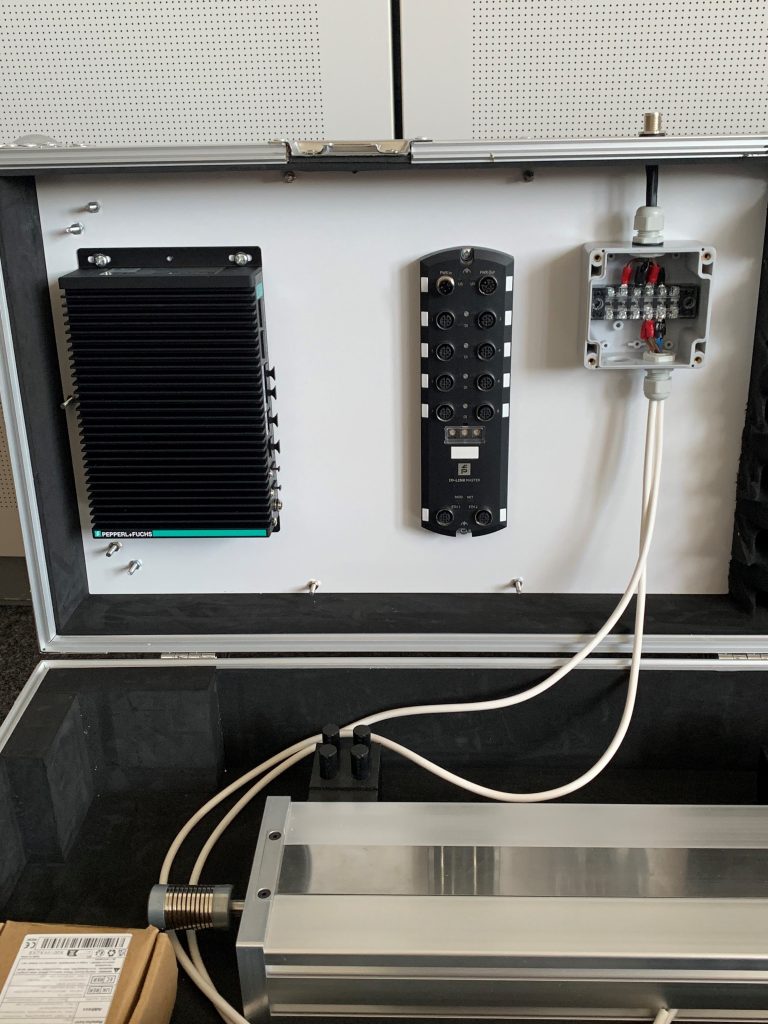
Alina und Laura: We took over the exhibit after the 3D model and the linear axis were installed in the case. In addition, the power box and the industrial PC were installed. However, the cables hat not yet been laid. Our task was now to automate the suitcase. For this, we had to set up the industrial PC, the IO-Link master, and the IO-Link interface module. Finally, a dashboard hat to be created where the sensors data could be displayed in real time and additional information about the sensors could be accessed. One of our challenges was, for example, the implementation of the IO-Link interface modules, as this was quite technical and both of us are applied computer science students. We received help from the trade fair construction team. Another challenge was ensuring that the exhibit could also be used outside the company network.
But in the end, everything worked out well. During this time, we learned that detailed documentation is very important, especially when the project is handed over again and again. What especially motivated us was to see how automation is being created right before our own eyes. In addition, we were thrilled by the completed exhibit. Now it is functional and ready for customer visits. It was really a great practical phase, we also learned a lot about the FA product portfolio and gained exciting insights into the workflow within the sales department.
Ready for practice: The exhibit on tour
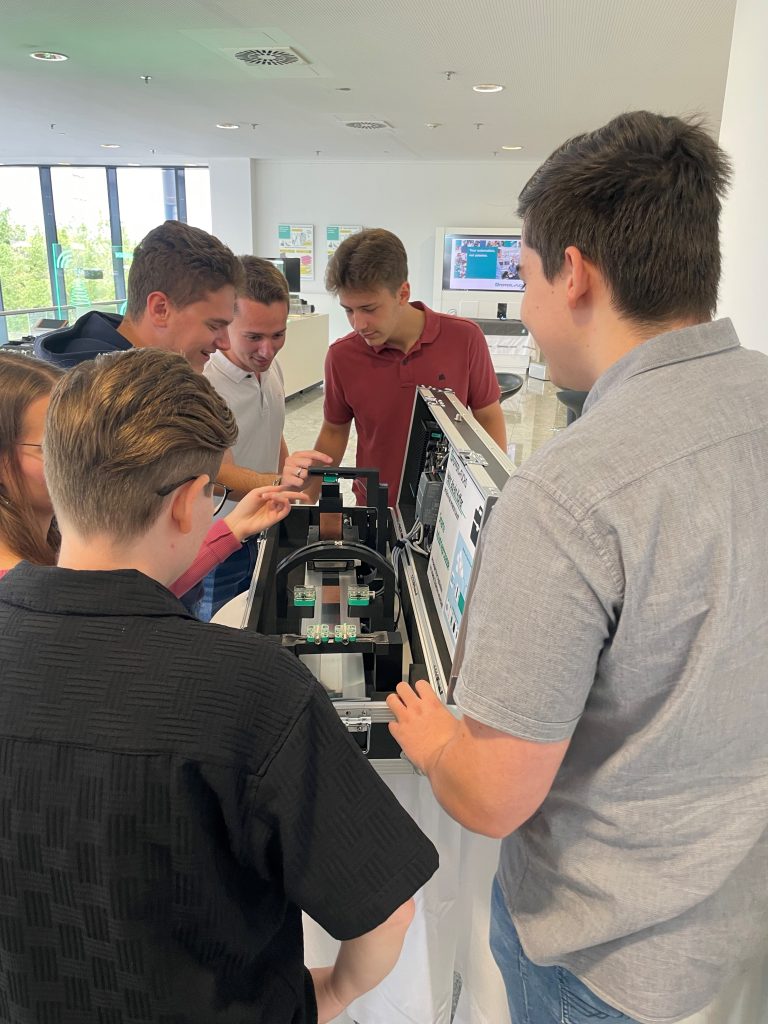
„The exhibit is now used as a central sales tool in the field,” says Tizian, Channel Account Manager at Pepperl+Fuchs in Mannheim. “It enables us to demonstrate the functionality of our sensor solutions to our customers on site in a clear and practical way. This creates an interactive experience: customers not only experience the product in theory, but also see measurements, reactions and data live in practice. The exhibit makes a field visit much more attractive and clearly stands out from a classic presentation with slides. On top of that, the exhibit fits into the trunk of the company car without any problems, unlike our trade fair exhibits. In fact, the exhibit has already been used on one or the other field visits. In the future, it will also be presented during visits to our partners in Mannheim as well as at their in-house trade fairs.”
Impressions